
Last updated September 25, 2026
Free written scope consultation - allowances, timeline, and change-order rules on paper before a single trade is scheduled
 Before
 After
After Before
 After
After Before
 After
AfterConstruction Cost Breakdown: The Mountain View Homeowner’s Reference for 2026
The average Mountain View framing carpenter bills at $95-$115 per hour in 2026, compared to a national average of $62. That gap adds $8,000-$15,000 to a standard 400-square-foot addition before a single permit fee is counted. Most online cost guides use national averages that undercount Mountain View’s labor market by 20-35% and ignore Santa Clara County’s permit fee schedule entirely. This guide uses 2026 local figures, names the cost drivers specific to Mountain View, and shows how each line item is calculated so you can evaluate any bid against real numbers. For DIY vs Professional Construction: The Mountain View Homeowner’s Decision Guide, see our companion resource.
Quick Answer
A typical Mountain View residential construction project in 2026 runs $285-$420 per square foot for finished space, with total costs driven by three factors you won’t find in national guides: labor rates 35-55% above national averages, ICC-based permit valuations that often exceed contractor bid prices, and material multipliers reflecting Bay Area supply chains. A 400-square-foot addition with mid-grade finishes totals $145,000-$195,000 all-in, including permits, fees, and a 15-18% general contractor margin.
Table of Contents
- Mountain View Labor Rates by Trade: 2026
- Material Cost Multipliers vs. National Average
- Mountain View Permit Fee Schedule and ICC Valuation
- Overhead and Profit: What the Margin Covers
- Change Order Cost Mechanics
- Real Project Examples: Kitchen, Bath, Addition
- How to Evaluate a Bid Line by Line
- Common Mistakes to Avoid
 Before
 After
AfterMountain View Labor Rates by Trade: 2026
Labor accounts for 40-55% of most residential construction budgets in Mountain View. The rates below reflect what we actually pay our subcontractor partners in 2026, drawn from our project records across the past 18 months. These are billed rates, not take-home wages; they include payroll taxes, workers’ compensation insurance (particularly expensive in California), and basic tool allowances.
| Trade | Union Rate (per hour) | Non-Union Rate (per hour) | Notes |
|---|---|---|---|
| Framing Carpenter | $112-$128 | $95-$115 | Includes rough and finish carpentry; union crews common on additions over 800 sq ft |
| Electrician | $125-$145 | $105-$125 | PG&E interconnect work requires licensed electrician; no handyman substitution |
| Plumber | $118-$138 | $98-$118 | Gas line work adds 15-20% for additional certification |
| HVAC Technician | $108-$128 | $92-$110 | Heat pump installs require EPA 608 certification; common in Mountain View retrofits |
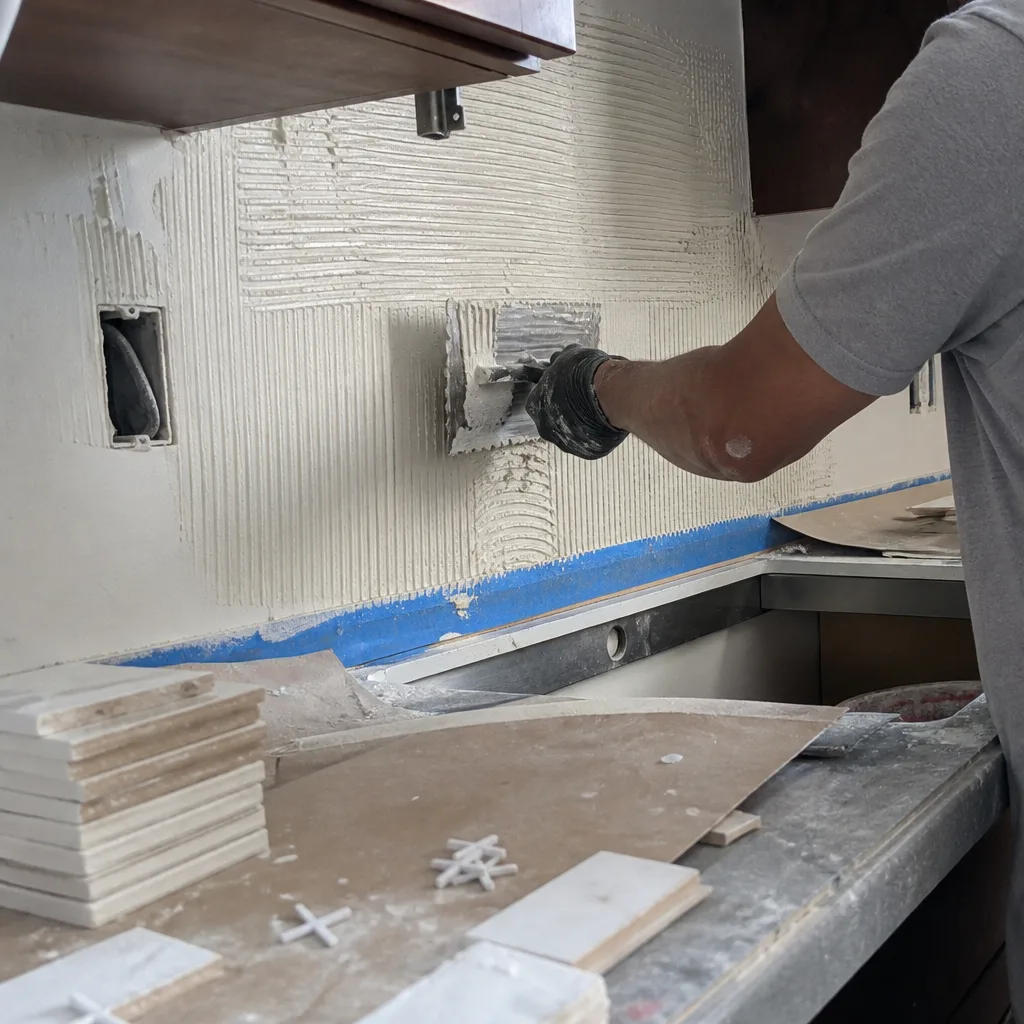
| Tile Setter | $95-$115 | $78-$95 | Natural stone commands upper end; porcelain mosaics add 10-15% |
| Painter | $68-$82 | $55-$72 | Spray application for cabinets adds 20%; most interior work is brush/roll |
| Roofer | $88-$105 | $72-$88 | Steep pitches (over 6:12) add $8-$12/hour for harness work |
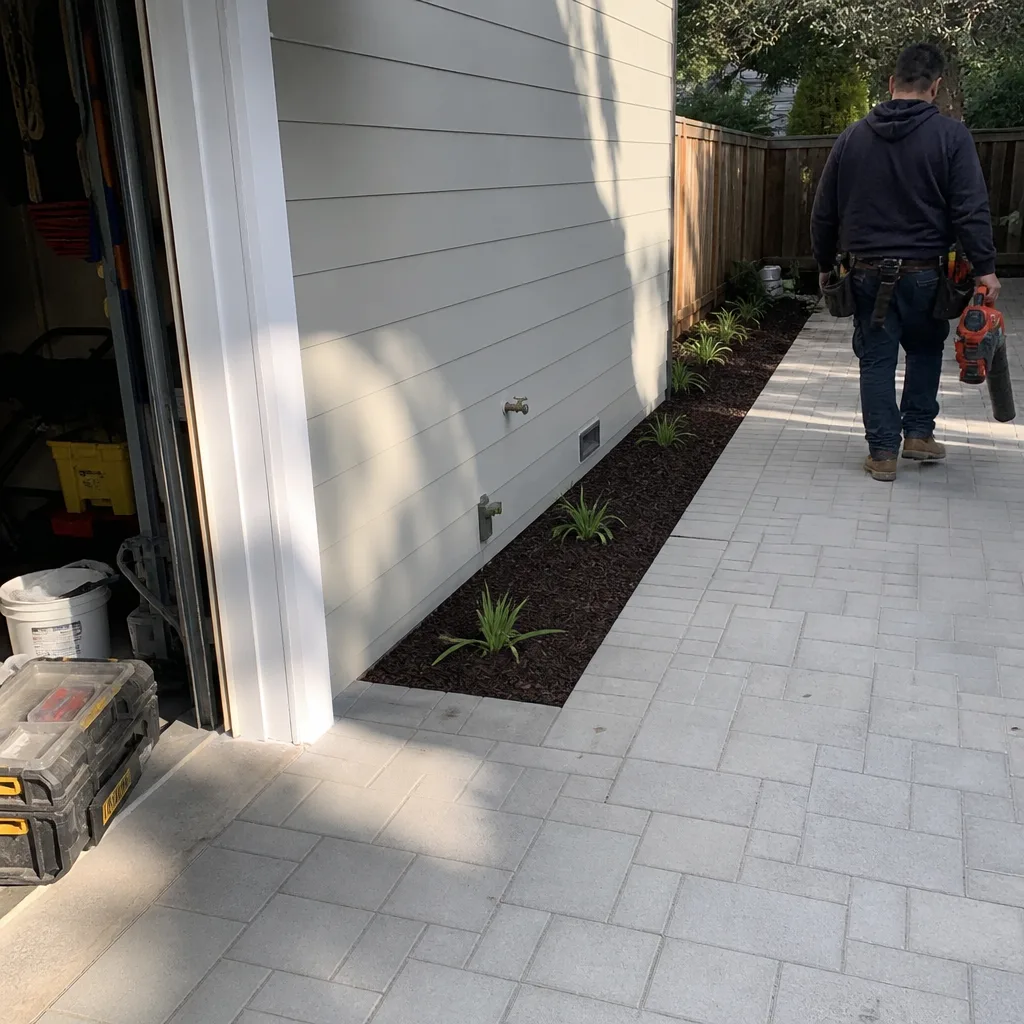
| Concrete/Masonry | $102-$120 | $85-$102 | Stamped or colored concrete for paver patios adds 15-25% |
Union versus non-union is not a quality distinction in our experience. Union crews tend to specialize in larger projects with standardized schedules; non-union crews offer flexibility on smaller jobs and tighter timelines. We’ve used both across our 4,000-plus projects. The choice affects scheduling more than outcome, though union electrical work is nearly standard on any project requiring PG&E service upgrades.
Mountain View’s proximity to San Jose and San Francisco creates a labor pool that commutes from as far as Tracy and Stockton. That commute distance is built into the rate. A carpenter living in Gilroy faces two hours of driving daily; the rate compensates for that time or the local housing cost if they live closer. This is why national averages from the Bureau of Labor Statistics fail here. They aggregate Fresno with San Francisco, and Mountain View is functionally a San Francisco labor market with slightly lower parking costs.
One local factor: the Mountain View voice and data corridor (the stretch along North Whisman and the Bayfront) competes for the same skilled tradespeople. Tech campus construction pays premium rates for expedited schedules, pulling workers from residential availability. We’ve seen two-week delays on bathroom remodels in the Old Mountain View neighborhood simply because electricians were committed to Google campus work. This doesn’t appear in national cost guides at all.
Material Cost Multipliers vs. National Average
Materials in Mountain View carry a geographic premium beyond the labor premium. The multipliers below reflect our 2026 purchasing through regional distributors serving Santa Clara County, compared to published national averages from the Craftsman Costbooks and RSMeans data we reference for out-of-state comparison.
| Material Category | Mountain View Multiplier | Primary Driver |
|---|---|---|
| Framing Lumber (SPF, KD) | 1.08x | Port of Oakland delivery; modest premium vs. Pacific Northwest direct |
| Engineered Lumber (LVL, I-joists) | 1.12x | Specialty distribution; limited local stock, longer lead times |
| Copper Pipe (Type L) | 1.12x | Comex pricing plus West Coast warehouse markup |
| PEX Tubing | 1.06x | More competitive distribution; closer to national |
| Electrical Panel and Gear | 1.15x | PG&E interconnect requirements; specific approved manufacturer list |
| Romex / MC Cable | 1.09x | Copper content drives most variance |
| Roofing Shingles (Architectural) | 1.07x | GAF and Owens Corning regional distribution; competitive |
| Tile (Ceramic/Porcelain) | 1.10x | Import logistics through Port of Long Beach; inventory carrying cost |
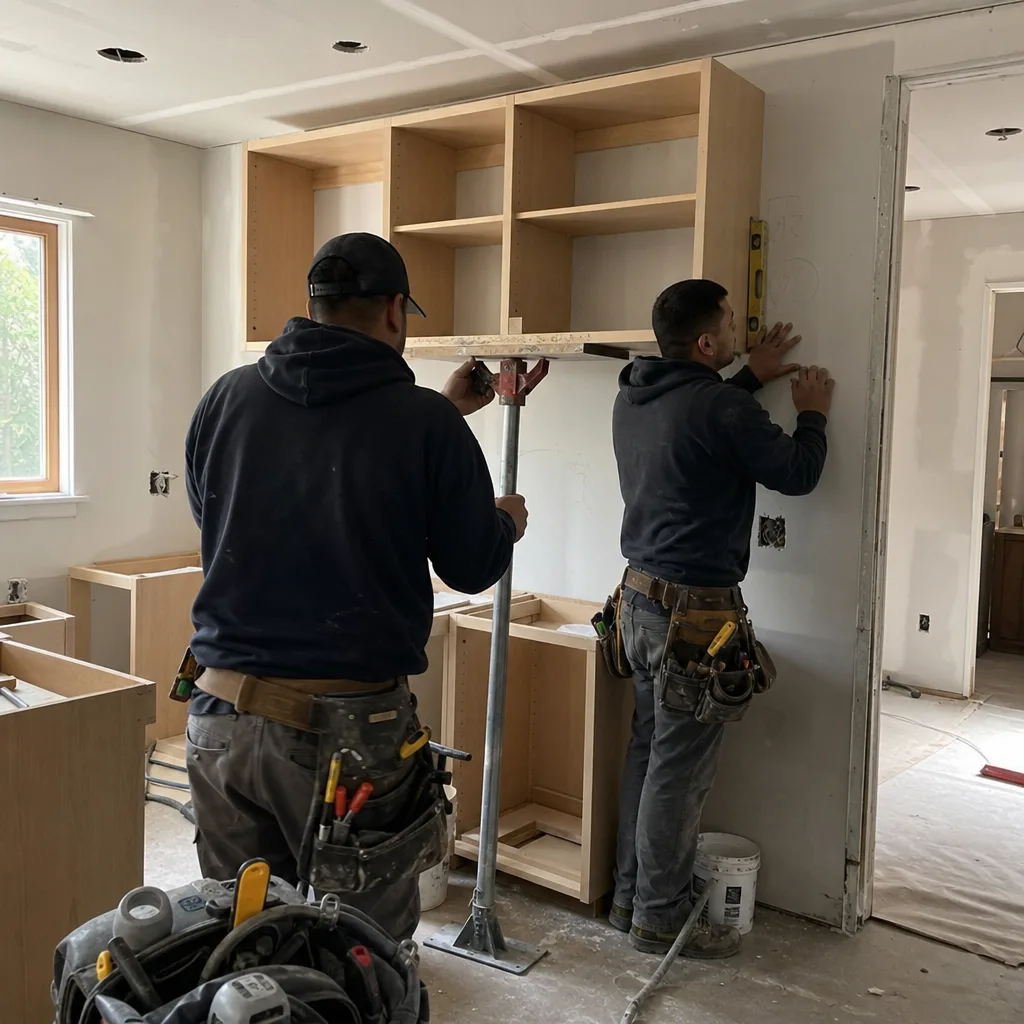
| Cabinets (Stock to Semi-Custom) | 1.05x-1.14x | KraftMaid and Wellborn stock competitive; custom work varies |
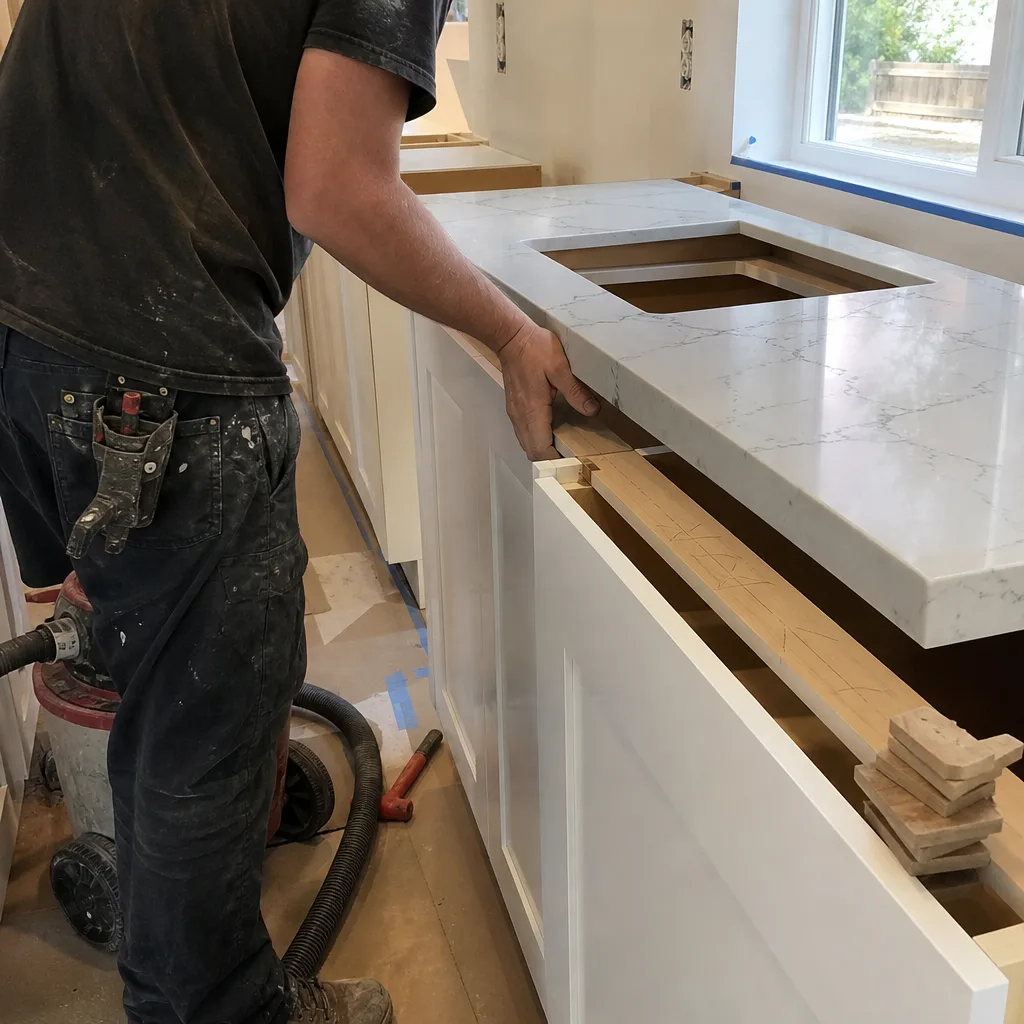
| Countertops (Quartz) | 1.11x | Cambria, Silestone, Caesarstone all fabricate regionally; slab transport adds cost |
| Windows (Vinyl, Replacement) | 1.08x | Andersen, Milgard regional distribution; installation labor drives more variance |
| Concrete (Ready-Mix, 3000 PSI) | 1.18x | Highest multiplier; plant capacity constraints, environmental compliance |
| Pavers (Concrete) | 1.09x | Belgard and Techo-Bloc manufacture in Western US; competitive positioning |
The electrical panel multiplier deserves explanation. PG&E maintains an approved equipment list for service upgrades and solar interconnects in its territory. Not every Siemens or Square D panel qualifies. The approved models carry a distribution premium, and supply constraints in 2025-2026 have pushed lead times to 4-6 weeks for common 200-amp configurations. We specify approved panels in every quote to avoid mid-project substitution. A contractor quoting non-approved equipment may appear cheaper until the inspector fails the installation.
Concrete is the outlier at 1.18x, and it’s not negotiable. The Bay Area’s remaining ready-mix plants operate under strict air quality management district rules. Delivery scheduling is tight; a missed pour window can delay a foundation by a week. We build concrete premium into every Home Addition in Mountain View and ADU quote from the start. Under Clause 1 of the Haven Standard, the written price includes this premium; we don’t discover it later.
For countertops, we quote Cambria, Silestone, and Caesarstone regularly. Cambria manufactures in Minnesota but distributes through regional slab yards in San Jose and Hayward. The slab itself travels far; the fabrication happens locally. Caesarstone and Silestone have more West Coast production, which narrows the price gap. A typical Mountain View kitchen with 45 square feet of quartz runs $4,200-$6,800 installed, with material representing 55-60% of that total.
Mountain View Permit Fee Schedule and ICC Valuation
Mountain View uses the ICC Building Valuation Data (BVD) table to establish project valuation for permit fee calculation, a process detailed in our Construction Permits, Codes & Inspections in CA: What You Need to Know guide. This is critical: the city does not use your contractor’s bid price. They use the ICC’s standardized valuation based on square footage, construction type, and occupancy group. In a high-cost market like Mountain View, the ICC valuation often exceeds the actual project cost, meaning you pay permit fees on a higher number than you spend.
Here’s how the calculation works for a typical project:
- Determine total square footage of new or altered space.
- Apply ICC BVD square-foot value for the construction type. For 2026, Group R-3 (one- and two-family residential) wood frame with semi-custom finish is valued at $285-$340 per square foot by ICC standards.
- Add valuation for specific systems: electrical, plumbing, mechanical, each with separate ICC schedules.
- Apply Mountain View’s fee formula: Plan Review Fee (65% of permit fee) + Building Permit Fee (based on valuation tier) + State Strong Motion Instrumentation Fee (0.0007 x valuation) + Technology Fee ($4.50 per $1,000 of valuation) + Administrative Surcharge (fixed, currently $47.50).
For a 400-square-foot addition with semi-custom finishes, the ICC valuation runs $114,000-$136,000. The actual construction cost might be $145,000-$170,000 including contractor margin, so the ICC valuation undershoots in this case. But for a high-end kitchen remodel with premium finishes but modest square footage, the ICC valuation can exceed actual cost. A 200-square-foot kitchen with $85,000 in actual work might carry an ICC valuation of $68,000-$78,000, which is lower. The variance cuts both ways.
Mountain View’s specific fee structure for 2026, applied to that 400-square-foot addition example:
- Building Permit Fee: $1,425-$1,680 (tiered by valuation)
- Plan Review Fee: $925-$1,090 (65% of permit fee)
- Technology Fee: $513-$612
- Strong Motion Fee: $80-$95
- Administrative Surcharge: $47.50
- Electrical Permit (separate): $280-$340
- Plumbing Permit (separate): $195-$240
- HVAC Permit (separate): $165-$210
- Total Permit and Fee Package: $3,620-$4,315
This is not optional, not negotiable, and not included in most online cost calculators. Some contractors quote “permit fees as incurred” or “TBD,” which under Clause 1 of the Haven Standard we do not do. Our written quotes include permit fee estimates based on ICC valuation for the specific project scope. The customer sees the number before work starts.
One Mountain View-specific note: projects in the San Antonio neighborhood or near the Caltrain corridor may trigger additional planning department review for historic compatibility or transportation demand management. This adds 2-4 weeks to permit issuance and $800-$1,500 in additional planning fees. We identify this risk during preliminary scope review, not after application submission.
Overhead and Profit: What the Margin Covers
General contractor overhead and profit (O&P) in Mountain View runs 15-20% of total project cost for established firms. Below 10% is a warning sign. Here’s what the margin actually pays for, drawn from our own operating costs.
Insurance and bonding: General liability ($2-$4 per $1,000 of project value), workers’ compensation (California rates for construction run $12-$28 per $100 of payroll depending on trade mix), and performance bond premiums for projects over $50,000. A $150,000 addition carries $3,000-$6,000 in insurance and bond costs alone.
Licensing and compliance: California contractor license, Mountain View business license, continuing education, OSHA training, and the administrative cost of maintaining documentation for every project. Our license number appears on every quote and permit application.
Supervision and project management: A dedicated project manager for residential work typically handles 3-5 concurrent projects. Their salary, vehicle, and communication tools are overhead spread across all jobs. In Mountain View, project managers with 10-plus years of experience earn $95,000-$135,000 annually.
Warranty reserve: The 365-Day Done Right Promise requires funding. We reserve 1.5-2% of project value for warranty callbacks. Most are minor: grout cracking, paint touch-up, cabinet adjustment. The reserve covers the labor and material to make it right without billing the customer.
Office and administrative: The live person answering calls 24/7, the software managing photo documentation, the accountant processing signed change orders. These are not luxury items; they are the infrastructure that keeps projects within a few percent of the agreed price.
A bid at 10% margin or below is either missing something or planning to recover through change orders. We’ve reviewed competitor quotes through our Free Second Opinion service where the margin was 8% but the contingency line was zero and permit fees were excluded. The customer would have faced $12,000-$18,000 in unanticipated costs. Under the Haven Standard, we show the full picture in the initial written price.
Change Order Cost Mechanics
Change orders are where construction budgets diverge from quotes. A $500 material change often generates a $1,200-$1,800 change order. The mechanics explain why, and understanding them helps homeowners evaluate whether a change is worth the true cost.
Remobilization: A subcontractor scheduled for Tuesday cannot simply return Thursday for a two-hour adjustment. The electrician who roughed in outlets for a Kitchen Remodeling in Mountain View job is committed to a Los Altos project the following day. Returning to Mountain View requires a half-day minimum charge, often a full day if the schedule is tight. That remobilization cost is $400-$800 before any material changes.
Revised permit documentation: Structural changes, electrical circuit additions, or plumbing relocations require amended plans. Mountain View charges $180-$280 for plan revision review, plus the delay of 5-10 business days for re-approval. Work cannot proceed on the changed scope until the revision is approved.
Subcontractor rescheduling: Trades stack in sequence. Delaying electrical by three days to accommodate a change pushes drywall, paint, and finish carpentry. Each pushed trade may charge a rescheduling fee or require a later start date that extends the overall project timeline. In Mountain View’s compressed construction season, a three-day delay can push finish work into the next available slot, adding a week or more.
Material restocking and reordering: Custom-ordered cabinets, countertops, or windows often cannot be returned. A cabinet color change after order means absorbing the original cabinets and purchasing new ones. Even stock items carry 15-25% restocking fees from distributors.
This is why Clause 3 of the Haven Standard states: no work proceeds on a change until the change order is signed. The customer sees the full cost impact before deciding. We’ve had homeowners choose to keep the original scope after seeing the true change order cost, and we’ve had others proceed with confidence because they understood the mechanics. Both outcomes are better than discovering the cost after the work is done.
In our experience across 4,000-plus projects, change orders total 3-8% of original contract value when the scope is well-defined at the start. They exceed 15% when the initial scope is vague or when “we’ll figure it out as we go” becomes the plan. The written scope we provide with every quote is designed to prevent the latter.
Real Project Examples: Kitchen, Bath, Addition
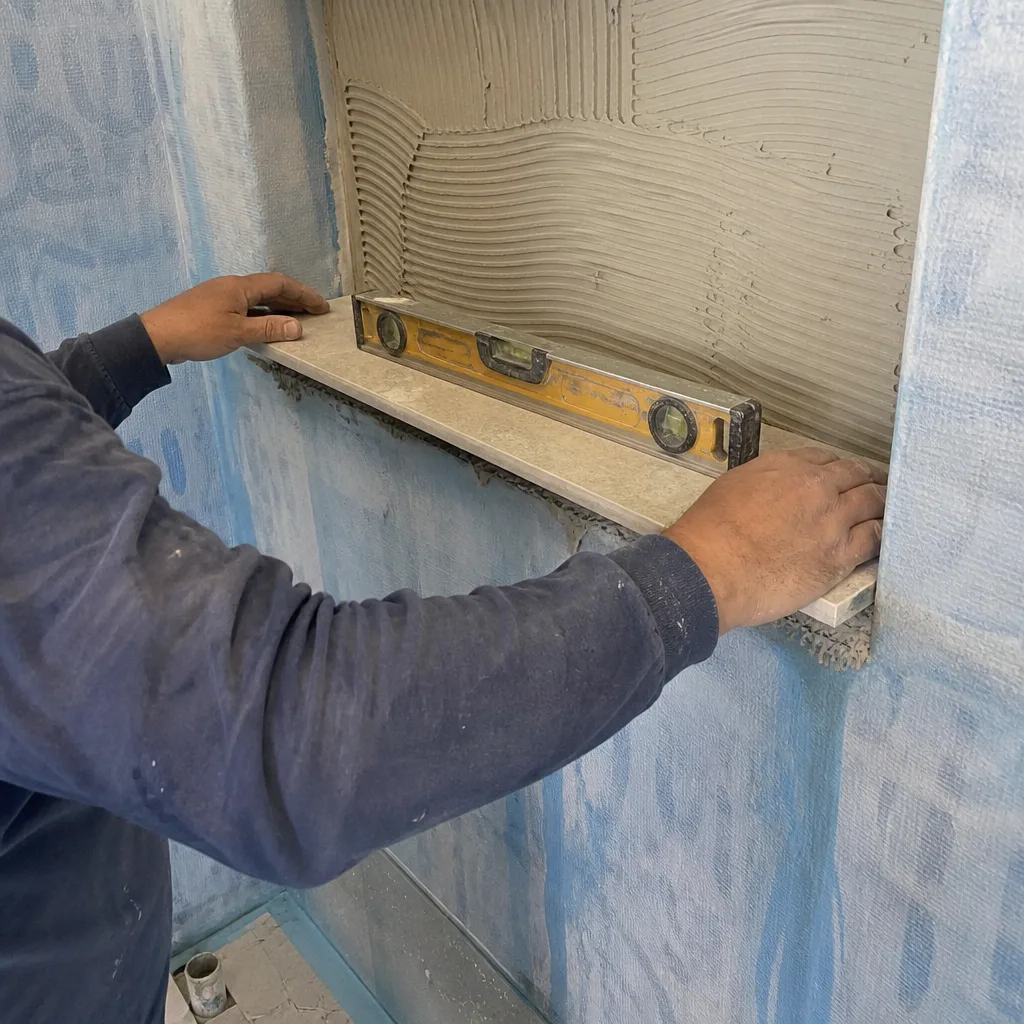
These examples use actual 2025-2026 project data from Rowan Construction Group Mountain View records, with identifying details removed. They show how the components above combine into total project costs.
Example 1: Mountain View Kitchen Remodel, 180 Square Feet
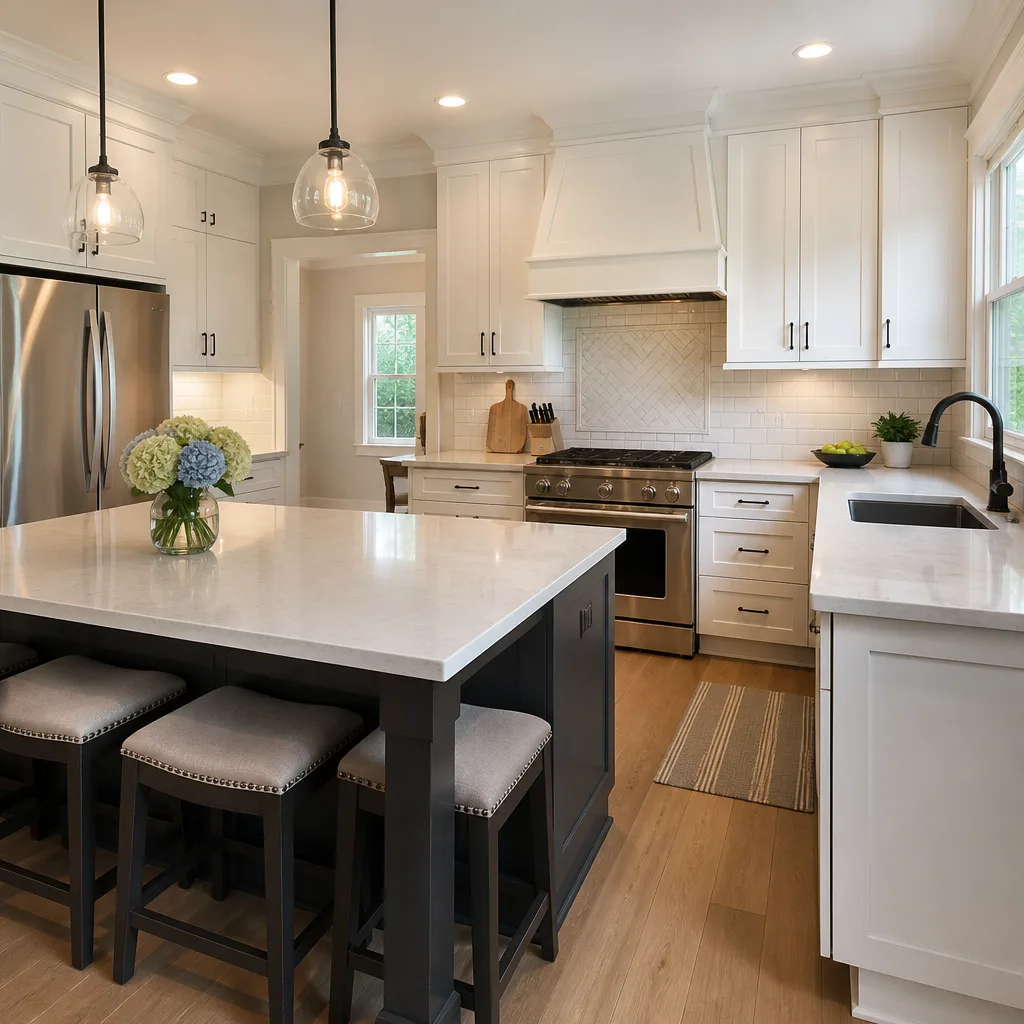
Location: Waverly Park neighborhood. Scope: gut to studs, relocate gas and water for island cooktop, new cabinetry (KraftMaid semi-custom), quartz countertops (Cambria), Kohler fixtures, LED recessed lighting, LVP flooring. No structural changes, no window relocation.
- Labor (carpentry, electrical, plumbing, tile, paint): $38,500
- Materials (cabinets, counters, fixtures, flooring, tile, lighting): $31,200
- Permits and fees (ICC valuation $58,500): $2,850
- Appliances (customer-supplied, not in our contract): $0
- Overhead and profit (16%): $11,700
- Total Project: $84,250
Timeline: 6.5 weeks. One change order for $1,400: homeowner opted for under-cabinet lighting after rough electrical was complete. Signed change order before work proceeded.
Example 2: Mountain View Hall Bathroom Remodel, 45 Square Feet
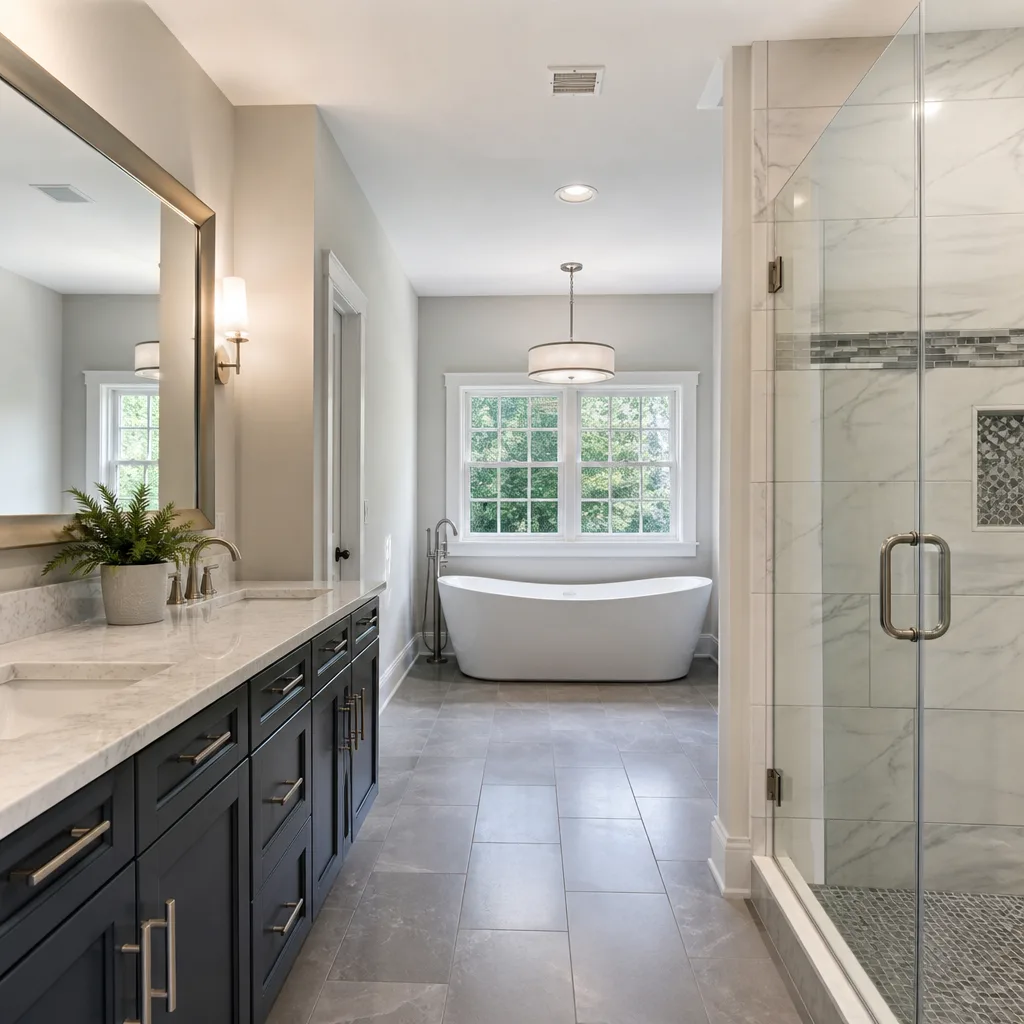
Location: Monta Loma neighborhood. Scope: replace tub with curbless shower, new toilet, vanity, tile walls and floor, exhaust fan upgrade, lighting. No plumbing relocation.
- Labor: $14,800
- Materials (tile, Silestone vanity top, Kohler fixtures, glass enclosure): $8,400
- Permits and fees: $1,180
- Overhead and profit (17%): $4,100
- Total Project: $28,480
Timeline: 3 weeks. No change orders. The written scope specified exact tile pattern and grout color; customer confirmed selections before work began.
Example 3: Mountain View 400-Square-Foot Master Suite Addition
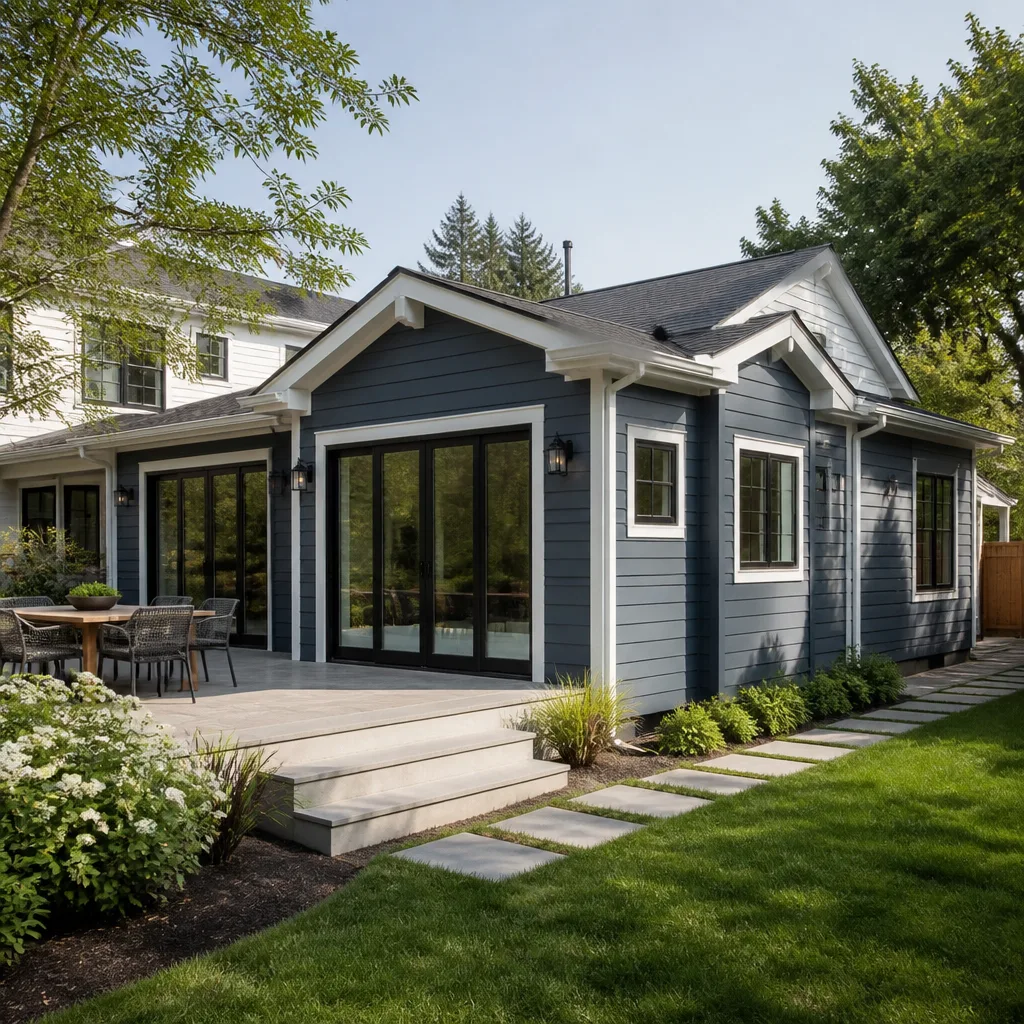
Location: Blossom Valley area (unincorporated Santa Clara County, Mountain View mailing address). Scope: foundation, framing, Roofing in Mountain View style to match existing (GAF Timberline HDZ), electrical, mini-split HVAC, insulation, drywall, paint, LVP flooring, walk-in closet build-out. Connected to existing structure; no kitchen or plumbing.
- Labor: $52,000
- Materials (lumber, roofing, electrical, HVAC, finishes): $48,500
- Permits and fees (ICC valuation $128,000): $4,150
- Overhead and profit (15%): $15,700
- Total Project: $120,350
Timeline: 10 weeks. One change order for $2,800: upgraded from carpet to LVP in closet after foundation was poured. Signed change order; material was not yet ordered, so restocking was avoided.
How to Evaluate a Bid Line by Line
When you receive multiple bids for a Mountain View project, the total number is less important than the line-item structure. Here’s our process for comparing quotes, which we also use in our Free Second Opinion service.
- Verify the scope match. One bid includes window replacement; another assumes windows remain. One specifies “paint” without noting primer or ceiling; another breaks out primer, ceiling, trim, and doors separately. Unmatched scopes cannot be compared by total price.
- Check for permit fee inclusion. A bid that says “permits TBD” or “pull permits, cost as incurred” is incomplete. Mountain View permit fees are calculable before work starts using ICC valuation. The written quote should show the estimate or note if the customer will pull permits directly (rare, and not recommended for structural or MEP work).
- Identify the contingency line. A 5-10% contingency for unforeseen conditions is standard on renovation work. A bid with zero contingency is either optimistic or planning to use change orders for every surprise. A bid with 15% contingency may be padding.
- Look for the change order policy. How are changes priced? Time and materials plus markup? Fixed pricing from a pre-established schedule? No policy stated means no protection.
- Confirm the warranty terms. What is covered, for how long, and who performs the work? The 365-Day Done Right Promise specifies that Rowan makes it right, period. Vague language like “satisfaction guaranteed” without specifics is not equivalent.
- Request the documentation description. What does the customer receive? Our projects include a documented photo record on every visit as standard. If a contractor cannot describe what documentation you’ll have at project completion, that absence will matter when you need to reference what was done.
A bid 20% below the others is not a bargain. It’s a different project, incomplete pricing, or a contractor who will recover margin through means you won’t control. We’ve reviewed competitor quotes where the “savings” came from excluding permit fees, using non-ICC valuation, omitting the general contractor’s insurance, or planning to charge time-and-materials for all change orders without a ceiling. The Free Second Opinion exists precisely because these omissions are common and costly.
Common Mistakes to Avoid
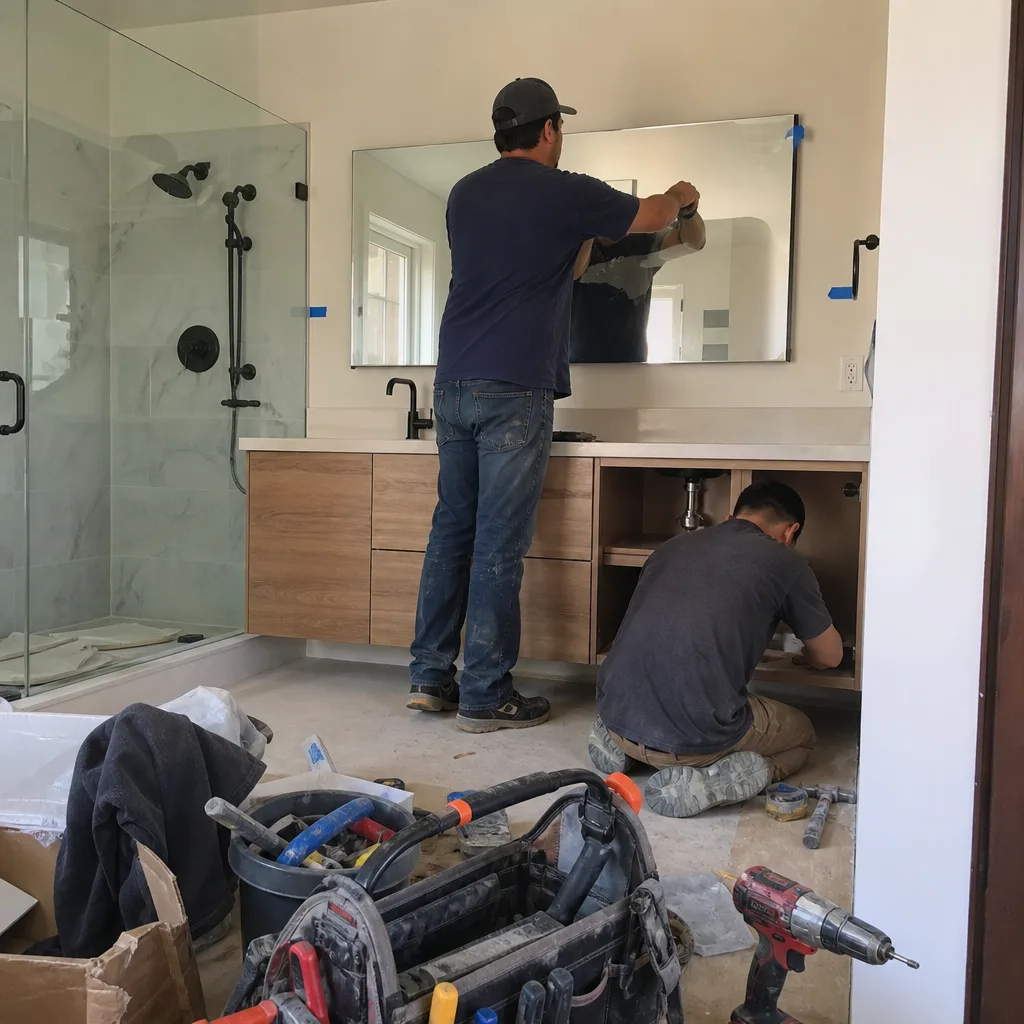
- Using national cost-per-square-foot figures for Mountain View budgeting. A $200/sq ft national average for mid-grade construction translates to $285-$340 here. Budgeting at the national number leaves a 30-40% gap that becomes apparent only after bids arrive.
- Ignoring ICC valuation for permit budgeting. Mountain View calculates fees on standardized valuation, not your contractor’s bid. A low bid doesn’t reduce permit costs if the ICC table values the work higher.
- Accepting “allowance” pricing without defined selection criteria. A $5,000 tile allowance sounds adequate until you select $18/sq ft tile and need 120 square feet. Specify the allowance basis: price per square foot, brand tier, or specific product category.
- Starting work without a written change order process. Verbal approvals for changes create disputes. Under the Haven Standard, no work proceeds on a change until the change order is signed. Any contractor who works on verbal authorization is creating liability for both parties.
- Comparing bids with different completion definitions. “Turnkey” means different things. One bid includes final cleaning; another doesn’t. One includes window coverings; another excludes them. Define completion in writing.
- Overlooking the true cost of owner-supplied materials. That $800 fixture from a big-box store requires installation labor, often at higher rates due to unfamiliarity or missing parts. Contractor-supplied fixtures include markup but also include warranty and installation compatibility.
- Assuming faster is cheaper. A compressed schedule requires overtime labor, expedited material shipping, or both. The Mountain View market’s tight labor pool means premium pay for weekend or evening work. Realistic timelines control costs better than rushed ones.
When to Call a Professional
Call a licensed contractor when your project involves structural modification, electrical or plumbing relocation, or permit requirements. In Mountain View, this covers most work beyond cosmetic painting and flooring replacement. The city’s building department enforces permit requirements actively; unpermitted work discovered during sale disclosure can delay or derail transactions.
Specific scenarios: foundation work of any kind, wall removal (even non-load-bearing, which requires verification), electrical panel upgrades or circuit additions, gas line modification, and any project exceeding $500 in labor and materials (California’s threshold for contractor licensing). Roof replacement requires a C-39 license; Roofing in Mountain View work without it exposes the homeowner to liability if a worker is injured.
Rowan Construction Group Mountain View offers free estimates in Mountain View. Browse more guides & resources on local construction planning. Every estimate is a written price with a written scope, delivered before any work starts. Call (669) 215-4852 to schedule. We also provide Free Second Opinions on any written estimate from another contractor; bring your quote and we’ll review it line by line at no charge.
Frequently Asked Questions
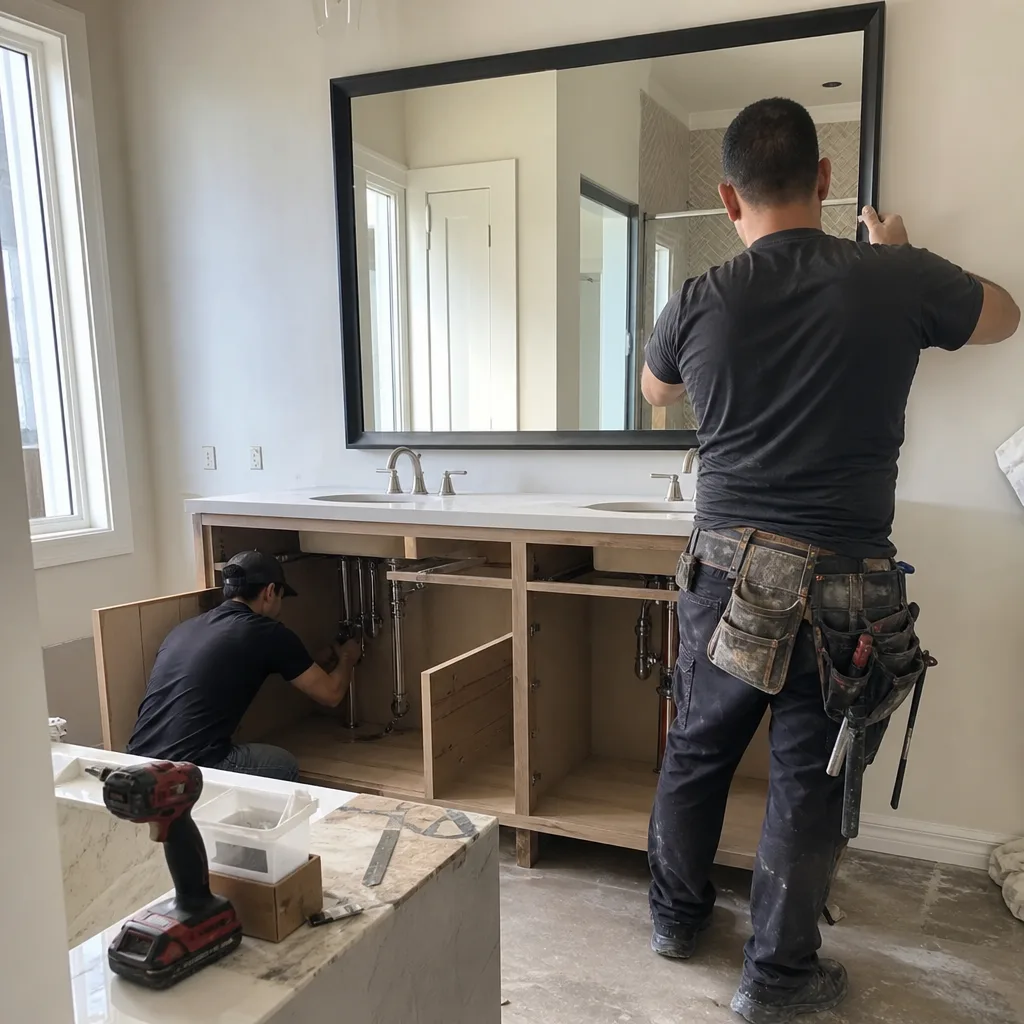
A 400-square-foot addition in Mountain View typically costs $145,000-$195,000 including permits, fees, and contractor margin, with finished space running $285-$420 per square foot depending on finish level and structural complexity. Call (669) 215-4852 for a written estimate on your specific project; estimates are free.
Mountain View labor rates run 35-55% above national figures due to Bay Area housing costs and competition from commercial construction, while material multipliers add 5-18% depending on category. Permit fees based on ICC valuation, not bid price, add a further layer specific to local code enforcement. These three factors explain most of the gap.
Under the Haven Standard, the written price is fixed for the defined scope. Changes requested after work begins require a signed change order with the full cost impact shown before any work proceeds. Our 4,000-plus project history shows final costs within a few percent of the original agreed price when this discipline is maintained.
Rowan Construction Group pulls all permits as part of our standard process. We include permit fee estimates in every written quote, calculated from ICC valuation for the specific project. The customer sees the permit cost before work starts, not as a surprise during construction.
A typical Mountain View kitchen remodel of 150-200 square feet takes 6-8 weeks from demolition to final walkthrough, assuming no structural changes or permit delays. Projects in areas requiring additional planning review (San Antonio neighborhood, Caltrain corridor proximity) may add 2-4 weeks for permit issuance. The written schedule we provide with every quote includes these factors for the specific address.
We include a 5-8% contingency in our written quotes for renovation work, where concealed conditions are more likely. New construction typically carries 3-5%. This contingency is part of the written price, not an add-on. If unused, it reduces the final invoice. If conditions require it, the funds are available without additional negotiation. Call (669) 215-4852 to discuss contingency handling for your specific project.
The Bottom Line
Mountain View construction costs in 2026 require local figures, not national averages. Labor rates 35-55% above national norms, material multipliers of 1.05-1.18x, and ICC-based permit valuations create a cost structure that online calculators systematically understate. A realistic budget for finished residential construction runs $285-$420 per square foot, with the variance driven by finish selections, structural complexity, and the contractor’s administrative discipline.
The most controllable cost factor is scope definition. Projects with detailed written scopes, signed change order processes, and documented photo records finish within a few percent of their original price. Projects with vague scopes and verbal approvals experience cost growth that exceeds any labor or material premium. The Haven Standard was built on this observation, and our 4,000-plus project record reflects it.
For a written price on your specific project, with line-item detail and permit fee estimates calculated from ICC valuation, call Rowan Construction Group Mountain View at (669) 215-4852. Estimates are free. Second opinions on any competitor’s written quote are also free. The number goes in writing before anyone picks up a tool.
Written by Grant Rowan, Owner at Rowan Construction Group Mountain View, serving Mountain View since 2007.