
Last updated September 25, 2026
Free written scope consultation - allowances, timeline, and change-order rules on paper before a single trade is scheduled


 Before
 After
After Before
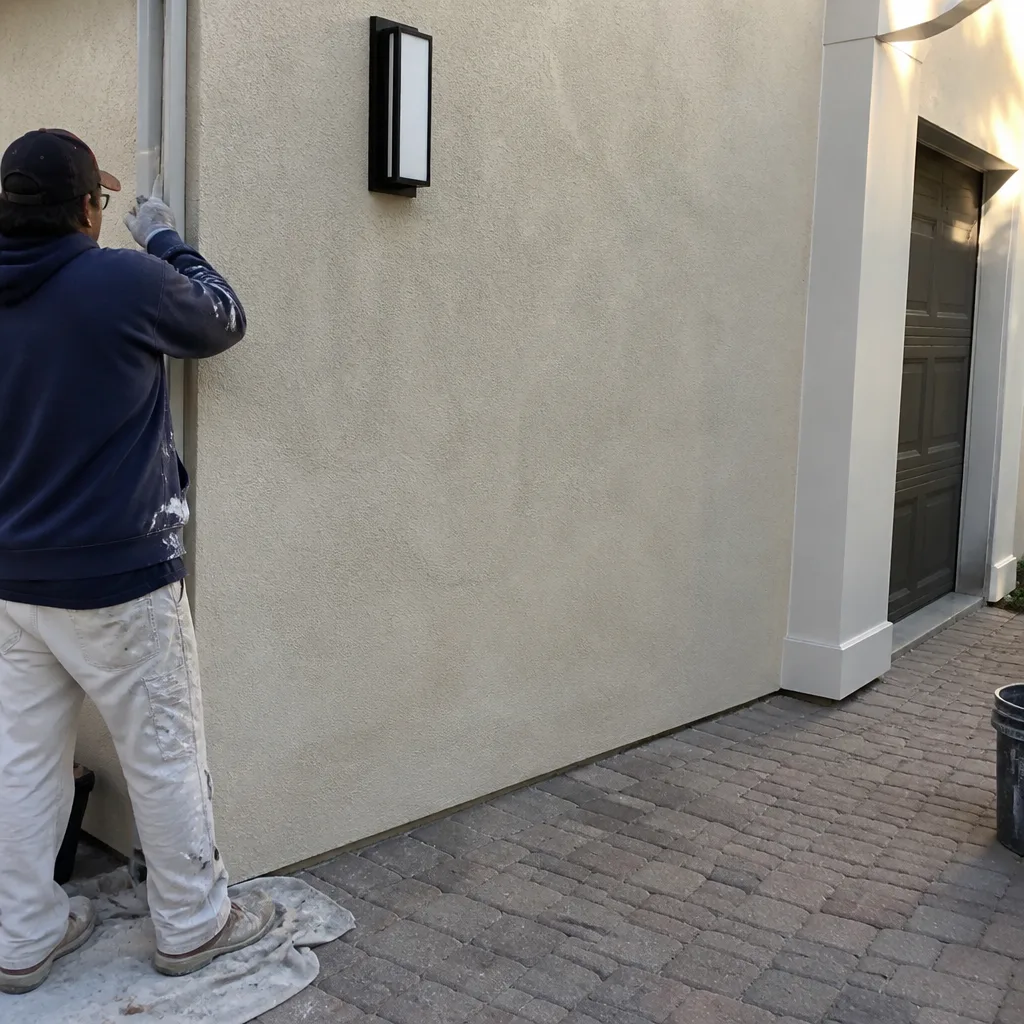 After
After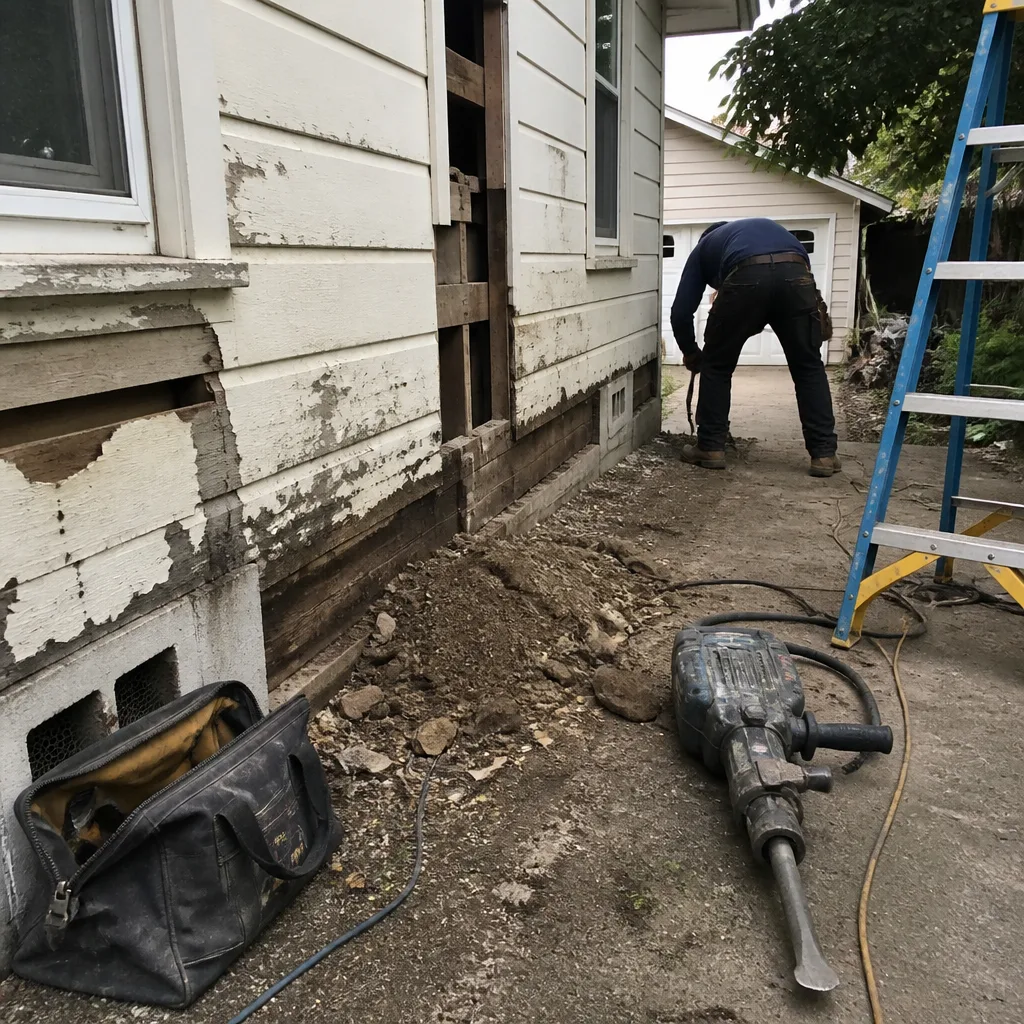 Before
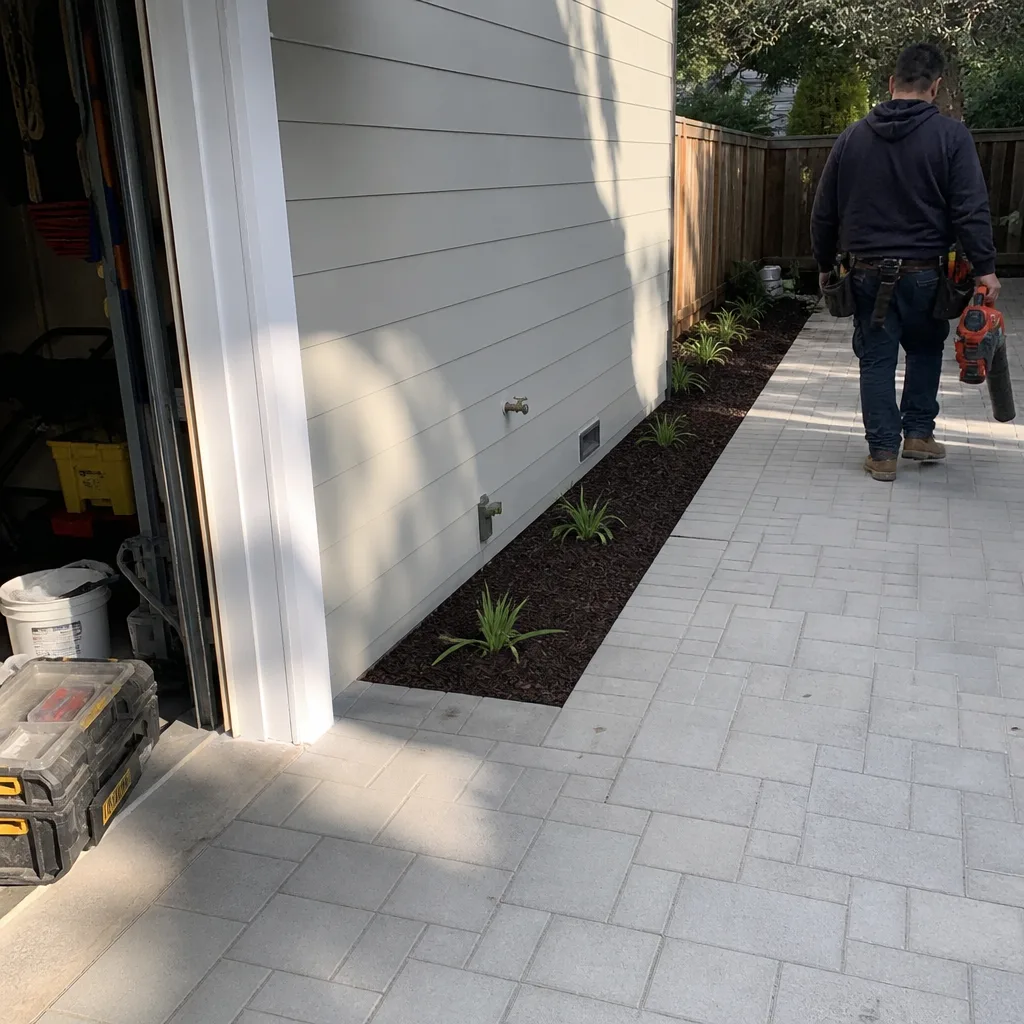 After
AfterConstruction Warning Signs: A Mountain View Homeowner’s Reference Guide
A stair-step crack pattern in exterior brick or stucco running at roughly 45 degrees from a window or door corner is almost never a paint problem. It’s differential settlement, and the repair cost difference between catching it at 1/8″ wide versus 1/2″ wide is typically $4,000 to $18,000. In Mountain View, where the clay-heavy soils of the Santa Clara Valley expand and contract dramatically with winter rains and summer drought, these patterns develop faster than homeowners expect. This guide names the specific warning signs, explains the mechanism behind each one, and gives dollar ranges for early-stage versus late-stage repair so you can make a timed, informed decision. For DIY vs Professional Construction: The Mountain View Homeowner’s Decision Guide, see our companion resource.
Quick Answer
Most structural defects in Mountain View homes announce themselves through visible patterns before they become expensive emergencies. The critical warning signs are: diagonal cracks wider than 1/8″ at door and window corners, horizontal cracks in foundation walls, doors that bind year-round after previously working fine, and moisture stains accompanied by white mineral deposits. Early intervention typically costs $2,500-$8,000; deferred repair often runs $15,000-$45,000 plus secondary damage.
Table of Contents
- Crack Taxonomy: Reading What Walls Are Telling You
- Moisture Indicators and What They Reveal
- Doors and Windows as Structural Signals
- Roofing Warning Signs You Can Spot from the Ground
- Foundation Focus: When Soil Becomes the Enemy
- Interior Clues: Drywall, Flooring, and Trim
- When to Call a Structural Engineer Versus a Contractor
- Cost Ranges: Early Catch Versus Late Repair in Mountain View
 Before
 After
AfterCrack Taxonomy: Reading What Walls Are Telling You
Not every crack is structural. Learning to distinguish between benign shrinkage and active settlement saves Mountain View homeowners from unnecessary anxiety and from missing genuine threats.
Hairline Shrinkage Cracks (Cosmetic, Less Than 1/16″)
These run straight or slightly meandering, typically vertical, and appear within the first two to five years after construction or major remodeling. They’re caused by lumber drying, concrete curing, or stucco hydration, not by foundation movement. In Mountain View’s dry summers, new kitchen remodeling in Mountain View projects with relocated walls often show these by October. The fix is cosmetic: elastomeric caulk and repaint, $200-$600.
Diagonal Corner Cracks (Settlement, Monitor and Document)
The stair-step pattern at 45 degrees from a window or door corner is the signature of differential settlement, one side of the opening dropping relative to the other. Measure the width with a feeler gauge or credit card edge. At 1/16″ to 1/8″, document with dated photos and monitor quarterly. At 1/8″ to 1/4″, call for assessment. Beyond 1/4″, the crack is likely active and widening.
We’ve documented this pattern across Mountain View neighborhoods from Old Mountain View to Monta Loma, often where original 1950s slab construction meets newer additions with deeper footings. The soil moisture differential between original and added sections drives the separation.
Horizontal Foundation Cracks (Lateral Pressure, Act Within 30 Days)
A horizontal crack in a poured concrete or block foundation wall indicates lateral soil pressure exceeding the wall’s design capacity. This is not a monitoring situation. The mechanism is typically hydrostatic pressure from saturated soil, common in Mountain View where winter rains on the foothill slopes of the Santa Cruz Mountains create subsurface water movement toward the valley floor. Repair ranges from $8,000-$18,000 for wall stabilization with carbon fiber straps or steel I-beams, to $25,000-$45,000 if the wall requires replacement.
Vertical Foundation Cracks (Typically Shrinkage, Unless Wide)
Poured concrete shrinks as it cures. A vertical crack under 1/4″ is usually non-structural; epoxy injection runs $500-$1,500. If the crack is 1/4″ or wider, offset (one side higher than the other), or actively leaking, it needs professional assessment.
Moisture Indicators and What They Reveal
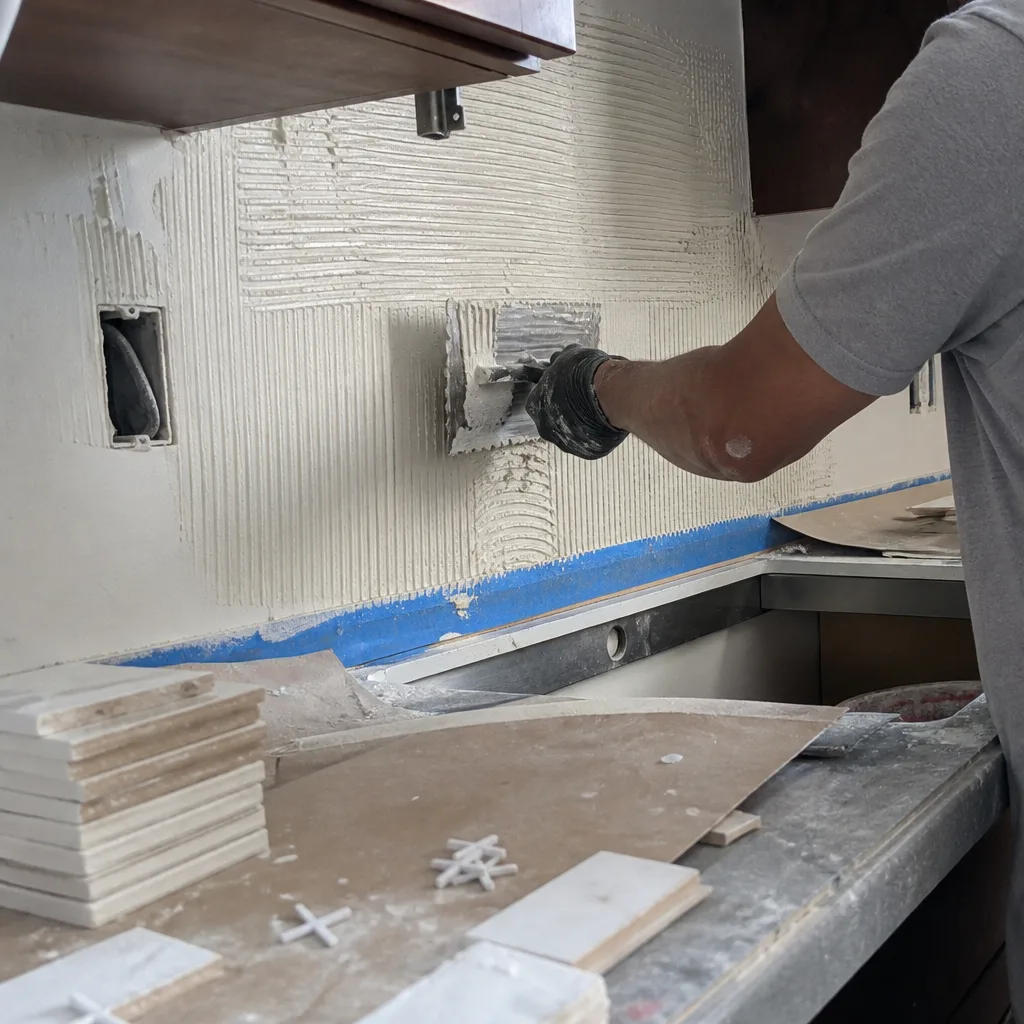
Moisture is the accelerant that turns minor defects into major repairs. Mountain View’s Mediterranean climate, with concentrated winter rainfall and extended summer drought, creates seasonal moisture cycles that stress every building component.
Efflorescence: The White Mineral Deposit
White, powdery deposits on concrete, brick, or stucco mean water has moved through the material, not merely across its surface. As water migrates, it dissolves soluble salts and deposits them at the evaporation point. The presence of efflorescence proves a moisture pathway exists.
In Mountain View’s older neighborhoods, we see this frequently on garage slab edges where the original damp-proofing has failed, and on retaining walls built into the sloped lots near the foothills. The repair is not scrubbing the surface; it’s interrupting the water pathway. Solutions range from $2,500-$6,000 for exterior waterproofing and drainage correction, to $8,000-$15,000 if interior slab drainage is required.
Staining Patterns and Their Meaning
- Circular or semicircular ceiling stains: Usually roof penetration leaks (vent pipes, chimneys) or ice dam back-up in climates with freeze-thaw. In Mountain View, it’s typically failed flashing at a roof penetration. Early repair: $800-$2,500. Deferred: $4,000-$12,000 with drywall and insulation replacement.
- Streaked stains running down walls: Window or door seal failure, or stucco crack admitting water. The streaking pattern follows the path of least resistance behind the finish. Repair: $1,500-$5,000 depending on whether the weather-resistive barrier is compromised.
- Dark patches at base of walls: Capillary rise from groundwater, failed perimeter drainage, or slab edge intrusion. Common in Mountain View’s clay soils where the water table fluctuates seasonally. Assessment with moisture meters and possibly soil testing: $400-$800. Repair: $3,500-$12,000.
Mold and Mildew as Diagnostic Tools
Mold growth location tells the story. Surface mold on bathroom ceiling paint is ventilation failure. Mold on drywall behind furniture against an exterior wall is thermal bridging and condensation. Mold at the base of walls with musty odor is groundwater intrusion. Each requires different intervention; misdiagnosis wastes money and leaves the problem active.
Doors and Windows as Structural Signals
Doors and windows are the most sensitive indicators of frame distortion because they operate with tight tolerances. A 1/4″ shift in a door frame makes latching impossible; the same shift in a wall stud may show no other symptom.
Seasonal Binding Versus Progressive Binding
A door that sticks in winter and frees in summer is seasonal wood movement from humidity changes. Mountain View’s winter relative humidity runs 70-85%; summer drops to 30-40%. Solid wood doors and frames move. The solution is often planing the edge and upgrading weatherstripping, $150-$400.
A door that worked for years, then began binding progressively and never freed, is structural. The mechanism is typically foundation settlement or framing distortion. Check for accompanying diagonal drywall cracks at the header. If present, the door is telling you the rough opening is racking. Repair: $2,500-$8,000 for foundation stabilization or header reinforcement, assuming catch at early stage.
Window Operation Changes
Double-hung windows that suddenly won’t stay open have broken sash cords or failed balance mechanisms, pure maintenance. Casement windows that require shoulder force to crank closed may have frame racking. Sliding doors that derail repeatedly after years of smooth operation often have settled thresholds.
In Mountain View’s bathroom remodeling in Mountain View projects, we frequently find original aluminum sliding windows from the 1960s-70s that have racked in their openings. The temptation is to replace the window; the correct diagnosis is often to level the sill and reset the frame, then replace. Doing it in reverse order guarantees callback.
Gap Patterns Around Frames
Measure gaps between frame and wall finish with consistent light behind. A gap that widens from top to bottom on one side indicates the frame is tilting. A gap that appears on opposite corners (top left and bottom right, for instance) indicates the opening is racking into a parallelogram. Both patterns demand structural assessment, not caulk.
Roofing Warning Signs You Can Spot from the Ground
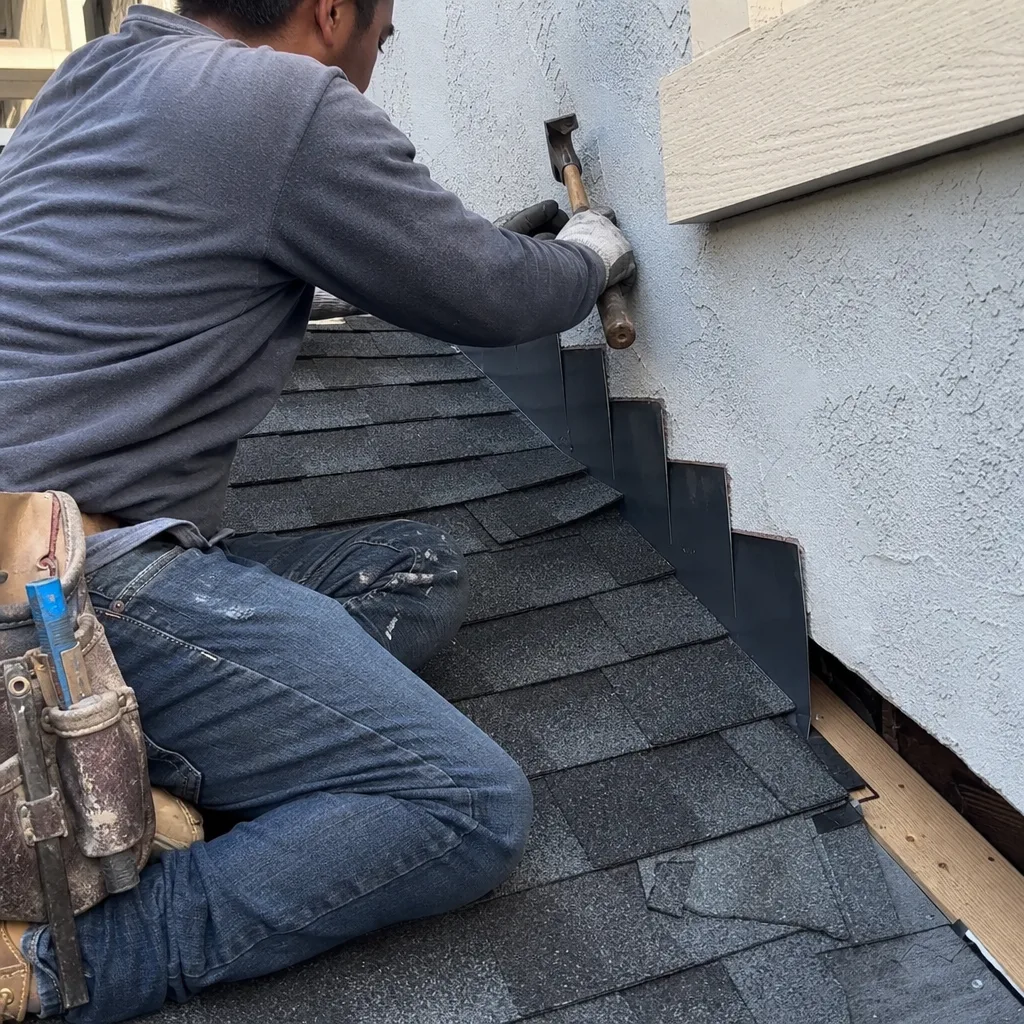
Roof access is dangerous and unnecessary for initial assessment. Several critical indicators are visible with binoculars or from the attic hatch.
Granule Accumulation: The Hidden Signal
Asphalt shingles shed granules throughout their life, but accelerated loss indicates end of service life or defective product. Check downspout strainers and gutter outlets. A handful of granules after a rainstorm is normal; a cup or more indicates the shingle’s protective layer is failing. The granules shield the asphalt mat from UV; without them, the mat cracks and curls within two to three years.
In Mountain View, where summer UV exposure is intense and prolonged, granule loss accelerates once it begins. Early replacement of a failing composition roof: $12,000-$22,000 for a typical 2,000 square foot home. Deferred replacement with decking damage from leaks: $18,000-$35,000.
Daylight Visible in Attic
From the attic, look at the ridge line during daylight. Any visible light indicates missing or displaced ridge cap, or in worst cases, ridge board separation. Also check where vent pipes and chimneys penetrate; light around these penetrations means failed flashing. Ridge repair: $800-$2,500. Full replacement if the pattern indicates widespread fastener failure: $15,000-$28,000.
Sagging Between Rafters
Viewed from the gable end, the roof plane should be straight or slightly convex. Sagging between rafters indicates overloaded spans, failed collar ties, or degraded sheathing. In Mountain View’s original ranch construction with 2×4 rafters at 24″ centers, this is common where owners added second layers of composition over original wood shake. The incremental load, 2-3 pounds per square foot, exceeds the original design. Assessment: $400-$800. Structural reinforcement or replacement: $8,000-$18,000.
Shingle Edge Curling and Tab Cracking
Curling at the shingle edges, especially on south and west exposures, is thermal cycling damage. Tab cracks at the cutout points are flexural fatigue. Both indicate the shingle is past mid-life in Mountain View’s climate. Plan replacement within three to five years, or immediately if any cracking exposes the asphalt mat.
Foundation Focus: When Soil Becomes the Enemy
Mountain View’s geologic context is specific and consequential. The Santa Clara Valley floor is filled alluvium, clay-rich and expansive. The foothills transition to colluvium and bedrock. Construction methods vary dramatically across these zones, and so do failure patterns.
The Expansive Clay Cycle
Montmorillonite clay minerals absorb water and expand, then shrink as they dry. A single wet-dry cycle can move a slab edge 1/2″ vertically. After ten cycles, the cumulative stress cracks slabs, tilts footings, and separates connections. Mountain View’s rainfall pattern, concentrated November through March with six-month drought, creates ideal conditions for this cycle.
Homes built between 1945 and 1975 on unreinforced slabs are most vulnerable. The original construction assumed minimal steel and thin concrete would suffice; the soil behavior was not well understood. We’ve assessed homes in the Rex Manor and Springer neighborhoods where the slab has fractured into independent plates, each moving seasonally.
Foundation Repair Cost Progression
| Condition | Early-Stage Repair | Deferred Repair |
|---|---|---|
| Hairline slab crack, no displacement | $800-$1,500 epoxy injection | $4,000-$8,000 with slab jacking |
| Corner crack, 1/8″ width, active | $3,500-$6,000 pier/pin | $12,000-$20,000 with framing repair |
| Horizontal wall crack, < 1/4" | $8,000-$12,000 wall stabilization | $25,000-$45,000 wall replacement |
| Slab heave, floor slope > 1/2″ per 10′ | $6,000-$12,000 moisture control | $15,000-$30,000 plus finish replacement |
Drainage: The Preventable Factor
Most foundation distress in Mountain View is moisture-related and therefore preventable. The critical elements are: gutters that discharge 6 feet from the foundation, not at the corner; downspouts that are not broken or disconnected; grade sloping away from the structure at 5% minimum for 10 feet; and no irrigation spray hitting the foundation. These are homeowner-maintainable. The cost of correction is typically $500-$2,000. The cost of foundation repair from failed drainage is ten to twenty times that.
Interior Clues: Drywall, Flooring, and Trim
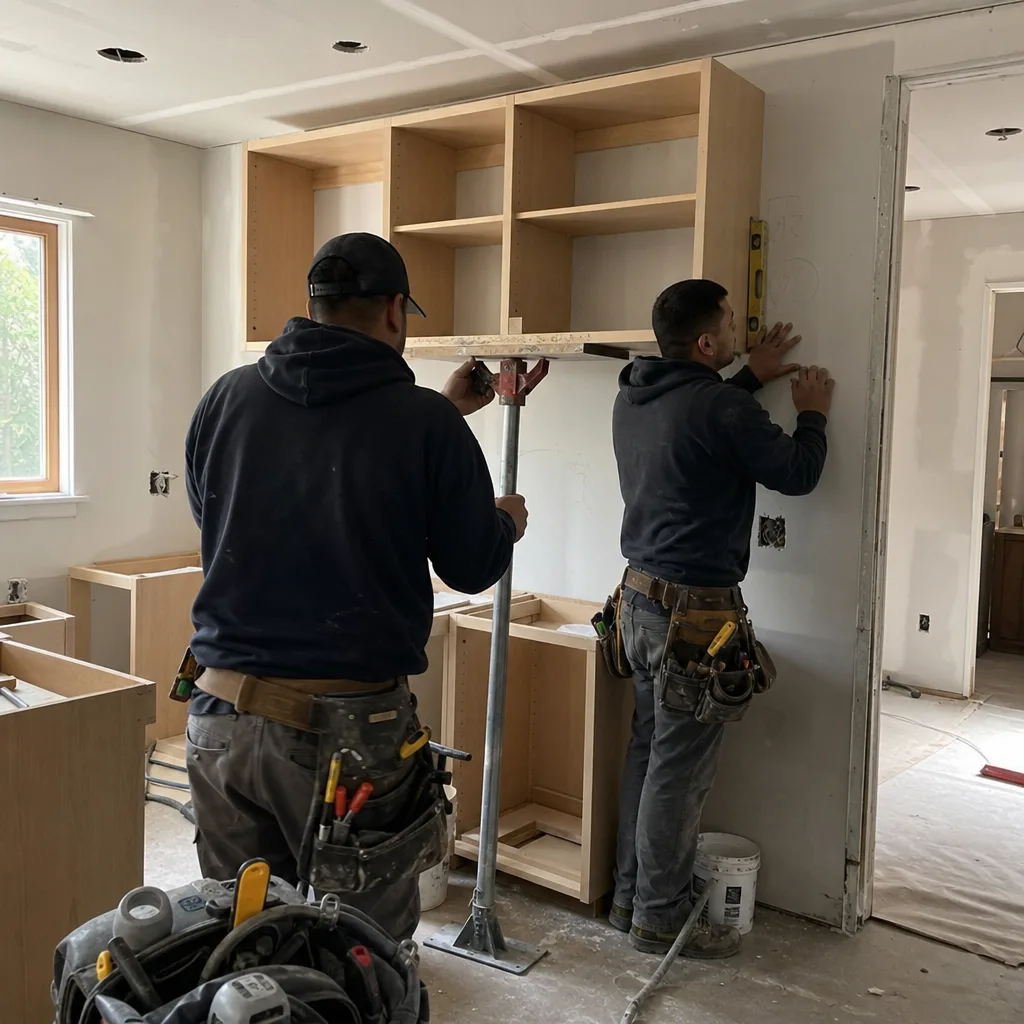
Interior finishes are the last line of indication, meaning the problem has progressed through the structure. These signs demand prompt assessment.
Drywall Crack Patterns
- Vertical cracks above doors: Often header deflection from inadequate beam sizing. Common where original 4×8 or 4×10 headers span new wider openings from prior remodeling without engineering. Repair: $2,000-$6,000 for proper header installation and drywall repair.
- Cracks at tape joints, recurring after repair: Structural movement exceeding the tape’s accommodation. The repair is not better tape; it’s addressing the movement source. We’ve seen this in Mountain View’s Eichler and similar mid-century homes where the original post-and-beam frame flexes seasonally.
- Popcorn ceiling cracks in geometric patterns: Often follow the drywall sheet layout, indicating the ceiling has detached from fasteners. In homes with original 1/2″ ceiling drywall on 24″ centers, gravity and vibration eventually win. Repair: $3,000-$7,000 for re-securing or replacement, more if asbestos-containing texture is present.
Flooring Signals
Tile floors with cracked grout in a straight line, following a control joint or substrate seam, indicate movement at that plane. Tile is rigid; it cracks when the substrate moves. Floating floors that gap seasonally then close are normal; floating floors with permanent gaps or buckling indicate moisture or structural issues.
In kitchen remodeling in Mountain View, we encounter original vinyl-over-plywood in homes from the 1970s where the plywood subfloor has delaminated from roof leaks or plumbing failures. The tile or LVT installed over this compromised substrate will fail within two years. The correct sequence is: find and stop the moisture source, replace damaged subfloor, then finish. Skipping steps is false economy.
Baseboard and Trim Separation
Baseboard pulling from the wall at the floor, with caulk cracking, indicates either floor movement or wall movement. If the gap is uniform along a wall, it’s floor settlement or heave. If the gap varies, wider at one end, the wall is racking. Either way, recaulking is temporary; the movement source must be identified.
When to Call a Structural Engineer Versus a Contractor
This distinction matters for both safety and cost. A general contractor assesses buildability and repair methods. A structural engineer assesses whether the building is safe and what forces are acting on it. Some situations require both; some require the engineer first. For help selecting the right professional, read How to Hire a Construction Contractor in Mountain View: A Step-by-Step Guide.
Call a licensed structural engineer before calling a contractor for:
- Any crack in a foundation wall wider than 1/4″, measured at its widest point
- Any horizontal crack in a foundation wall, regardless of width
- Any floor slope measurable with a 4-foot level (more than 1/2″ over 4 feet)
- Any door or window frame racking accompanied by exterior crack patterns
- Any sagging roof plane visible from the exterior, especially if recent or progressive
- Any crack that has visibly widened between two documented measurements
The engineer’s report, typically $800-$2,500 in the Mountain View market, becomes the repair specification. Contractors bid to that specification; the homeowner knows the scope is correct. Without it, three contractors may propose three different repairs for three different diagnoses.
For conditions below these thresholds, a qualified general contractor with structural experience can assess and propose repair. Rowan Construction Group Mountain View home assessments include documented photo records and written scope with flat pricing before any work begins. For conditions at or above these thresholds, we refer to a structural engineer we trust, then bid to their report.
Cost Ranges: Early Catch Versus Late Repair in Mountain View
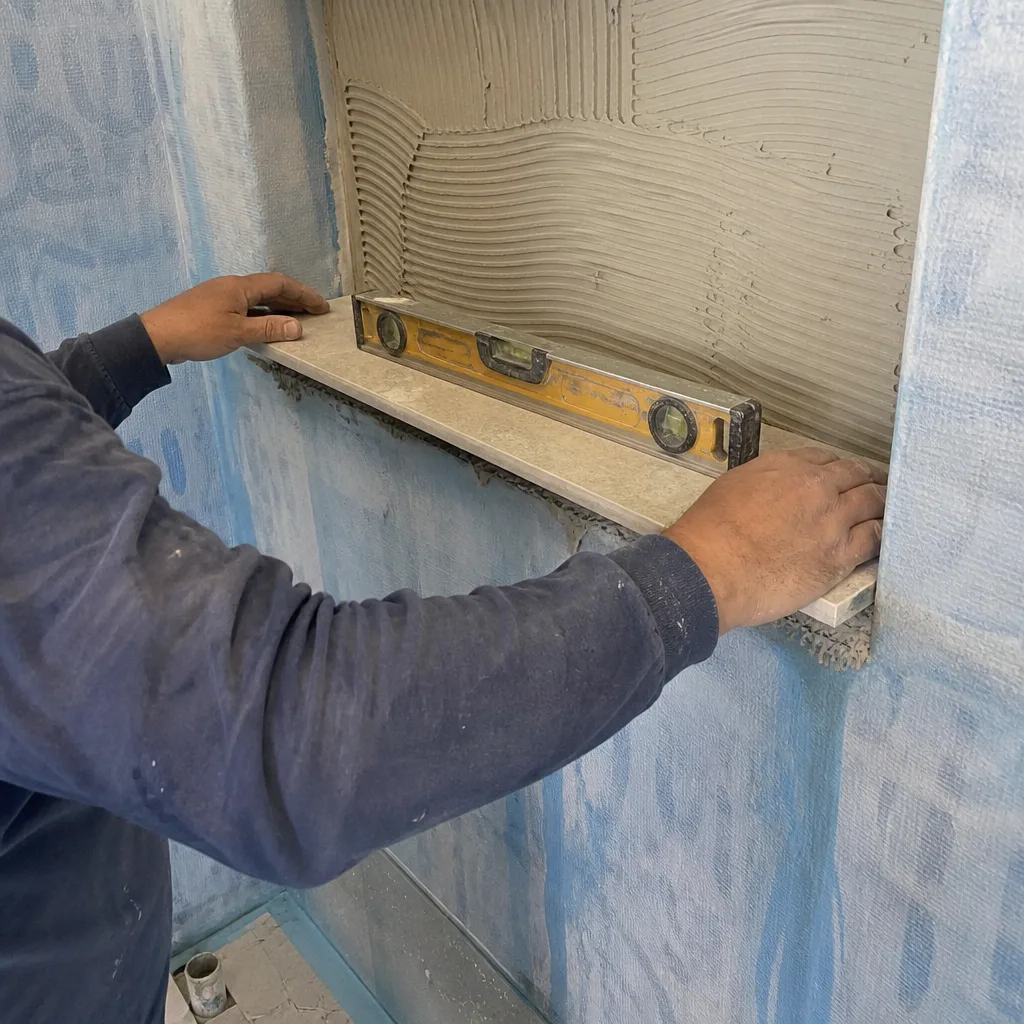
The following ranges reflect Mountain View’s market in 2024-2025, including permit costs, typical access conditions, and finish repair. They are ranges, not quotes; every project requires specific assessment.
| Problem | Early Intervention | Deferred Repair | Secondary Damage Risk |
|---|---|---|---|
| Diagonal settlement crack, < 1/8" | $2,500-$5,000 | $8,000-$18,000 | Water intrusion, framing rot |
| Foundation wall crack, horizontal | $8,000-$12,000 | $25,000-$45,000 | Wall failure, soil collapse |
| Roof leak, localized | $800-$2,500 | $4,000-$12,000 | Decking, insulation, interior finish |
| Granule loss, end of shingle life | $12,000-$22,000 | $18,000-$35,000 | Decking, fascia, soffit |
| Efflorescence with active moisture | $2,500-$6,000 | $8,000-$15,000 | Rebar corrosion, spalling |
| Slab heave, floor slope 1/4″ per 10′ | $4,000-$8,000 | $12,000-$25,000 | Plumbing fracture, finish replacement |
| Door/window racking with frame distortion | $3,000-$7,000 | $10,000-$22,000 | Glass breakage, security compromise |
These ranges assume catch at the stage described. The deferred column assumes the problem has progressed to require structural repair plus replacement of finishes damaged during the delay. The secondary damage column names what we’ve seen when homeowners wait for “a better time” financially.
Under Clause 1 of The Haven Standard, Rowan Construction Group delivers a written flat price before any work begins. The quote includes the full scope, the warranty terms, and the documented photo record deliverable. No change proceeds without a signed change order. This discipline, maintained across 4,000-plus projects since 2007, is why our projects finish within a few percent of the agreed number.
Common Mistakes to Avoid
- Assuming new construction means no defects. Mountain View’s rapid infill development, including ADU construction by firms like Abodu, Cover, and Dvele, produces quality structures but not immune ones. Settlement in the first two years is normal; distinguishing normal from excessive requires measurement, not assumption.
- Filling cracks with caulk and calling it fixed. Caulk accommodates movement up to 25% of its width. Structural movement exceeds this. The caulk cracks again, and the homeowner concludes “it didn’t work” rather than “the movement is active.”
- Waiting for the rainy season to end before assessing moisture. The optimal time to diagnose water intrusion is while it’s active. Summer assessment of winter leaks often shows no obvious source, leading to incomplete repair and repeat failure.
- Hiring based on the lowest bid without a defined scope. In Mountain View’s competitive contractor market, undefined scope invites low-ball bidding followed by change orders. The Haven Standard requires written scope with the price; “call for a quote” is not an option here.
- Ignoring neighborhood patterns. If three homes on your block have had foundation repair, your soil conditions are similar. The question is not whether you’ll have issues, but when you’ll catch them. Ask neighbors what they saw and when.
- Skipping permits to save money. Mountain View requires permits for structural repair, roof replacement, and most exterior work. Unpermitted work must be disclosed on sale, often at greater cost than the original permit would have been. Rowan pulls permits and passes inspections as standard practice.
- Replacing finishes before fixing the structure. New tile over a moving slab cracks again. New drywall over a racking frame cracks again. The finish is the last step, never the first.
When to Call a Professional
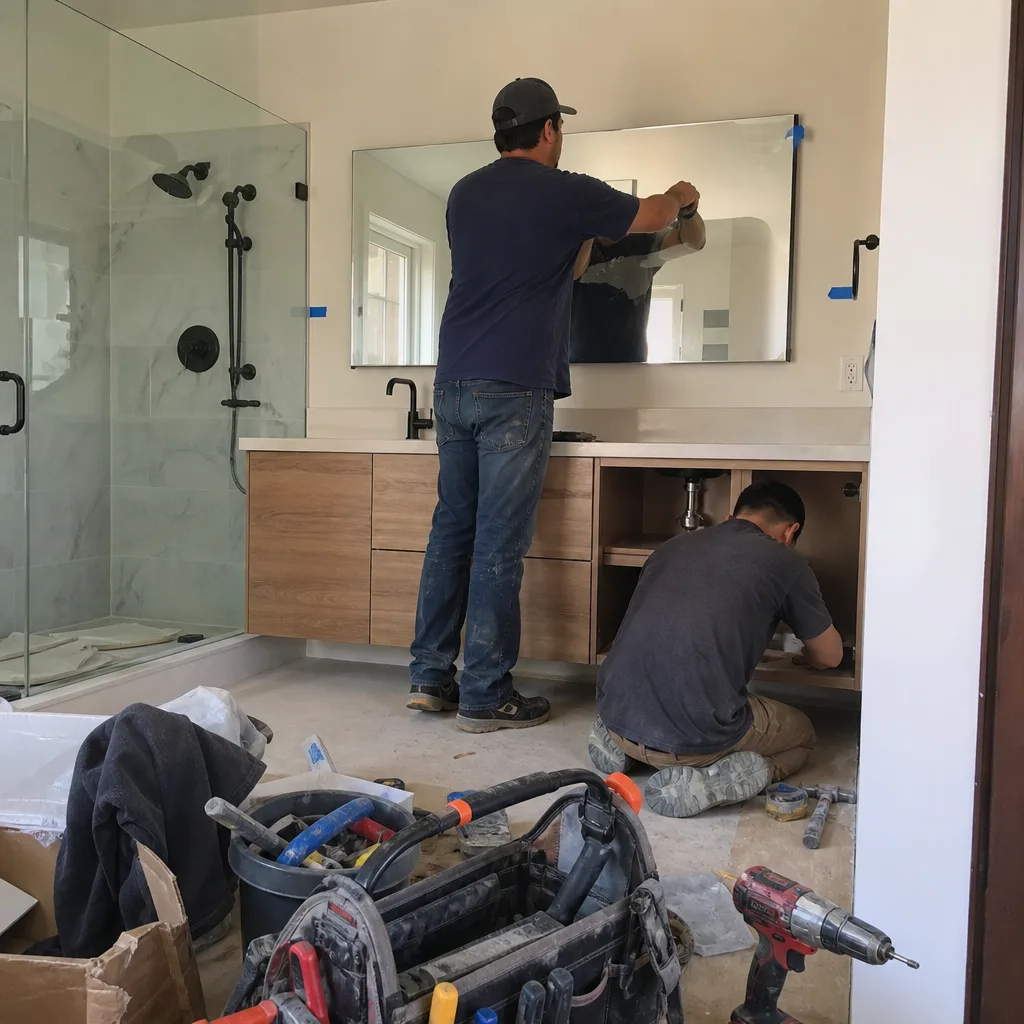
Call a structural engineer immediately for any horizontal foundation crack, any crack wider than 1/4″, or any floor slope you can detect with a level. For conditions below these thresholds, a qualified general contractor can assess and repair. Document everything with dated photos and measurements; progressive conditions require evidence to justify intervention timing.
Rowan Construction Group Mountain View offers free estimates in Mountain View. Our assessments include a documented photo record, a written scope, and a flat price before any work begins. Call (669) 215-4852 to schedule. We also provide free second opinions on any written estimate from another contractor; bring your quote and we’ll review it line by line. Browse more guides & resources for Mountain View homeowners.
Frequently Asked Questions
Foundation crack repair in Mountain View typically ranges from $800 for epoxy injection of a non-structural vertical crack to $12,000 for wall stabilization of a horizontal crack with carbon fiber straps or steel I-beams. Replacement of a failed foundation wall runs $25,000-$45,000. The critical variable is crack width and whether the crack is active. Call (669) 215-4852 for an exact quote; estimates are free.
Hairline cracks in stucco are common and usually cosmetic, caused by thermal expansion and contraction or shrinkage during curing. Cracks under 1/16″ that are random and non-progressive typically need only elastomeric coating. However, stair-step cracks at 45 degrees from openings, or cracks that widen seasonally, indicate structural movement and require assessment. Mountain View’s clay soils and seasonal moisture variation make progressive cracks more likely than in stable soil conditions.
Under The Haven Standard, no work proceeds on a change until the change order is signed. The original written price is fixed for the defined scope. If hidden conditions are discovered, we document them, propose a written change order with price, and obtain signature before proceeding. This discipline has kept Rowan’s projects within a few percent of the agreed cost across 4,000-plus jobs since 2007.
Humidity-related binding is seasonal, typically winter, and affects multiple doors similarly. Structural binding is progressive, year-round or worsening, and often accompanied by visible cracks at the door header or nearby walls. Test with a 4-foot level on the floor near the binding door; slope exceeding 1/4″ suggests foundation movement. Document with photos and measure the binding gap monthly to detect progression.
Yes. Mountain View requires building permits for foundation repair, structural modification, and most exterior work. The permit ensures inspection at critical stages and compliance with current codes. Unpermitted work must be disclosed in real estate transactions and may require retroactive permitting at greater cost. Rowan Construction Group pulls all required permits and schedules inspections as standard practice, included in our flat pricing.
Granule loss sufficient to expose the asphalt mat, curling or cupping of shingle edges, tab cracking, and any sagging of the roof plane indicate replacement is needed rather than repair. Localized damage from a single event may be repairable; widespread deterioration of these types means the shingle has reached end of service life. In Mountain View’s intense UV exposure, once granule loss accelerates, the remaining life is typically two to three years. For roofing in Mountain View, early replacement avoids decking damage and interior repair costs.
Within 30 days. A horizontal crack indicates active lateral pressure against the foundation wall, which does not self-resolve. Delay risks wall buckling, water intrusion, and in extreme cases, partial wall failure. The repair cost typically doubles if the wall requires replacement rather than stabilization. Schedule assessment promptly; the engineer’s report and contractor bid process takes two to four weeks in the Mountain View market.
The Bottom Line
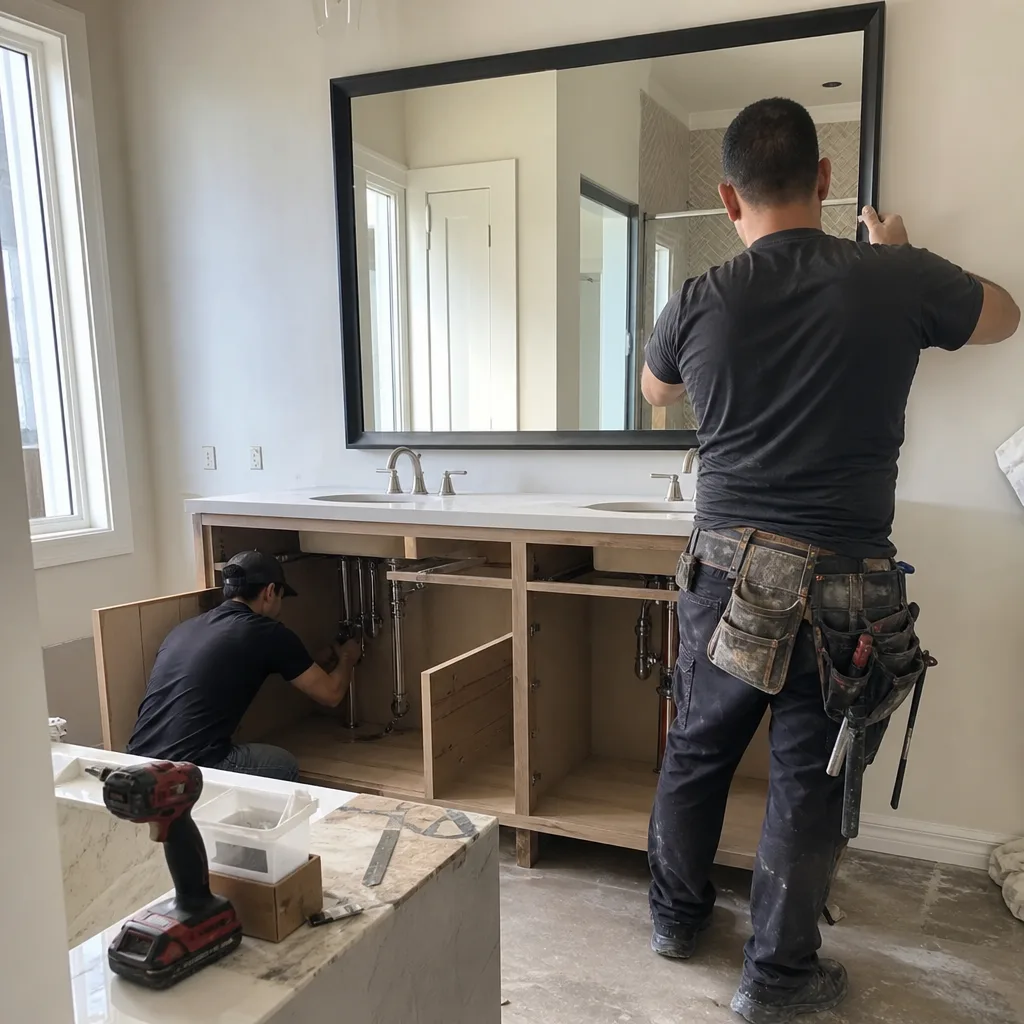
Construction defects communicate through patterns, not isolated events. The homeowner who learns to read diagonal cracks, measure door binding, and distinguish efflorescence from dust catches problems at the $2,500-$8,000 stage rather than the $15,000-$45,000 stage. Mountain View’s specific soil, climate, and construction history create predictable failure modes that reward informed observation.
Document what you see. Measure what you can. Call for assessment when patterns progress. And never defer structural evaluation for financial convenience; the cost of certainty is always lower than the cost of collapse.
Written by Grant Rowan, Owner at Rowan Construction Group Mountain View, serving Mountain View since 2007.